Start with the seats, not the tables
Before moving furniture, sit in each place you use regularly. Notice where your hand naturally goes when you set down a drink, put aside a book or reach for a lamp. A side table is useful when you can reach its surface without leaning far forward or twisting around. A table that looks balanced from the doorway may be too distant from the seat it is meant to serve.
Think about how each seat is used. A reading chair may need room for a book, glasses and a drink. A sofa seat used for conversation might need only a landing spot for a cup. Make a quick mental list of the seats that lack a convenient surface, then decide whether they each need a table or can comfortably share one. Shared tables work best when both people can reach them from a relaxed sitting position.
Put the surface within an easy reach
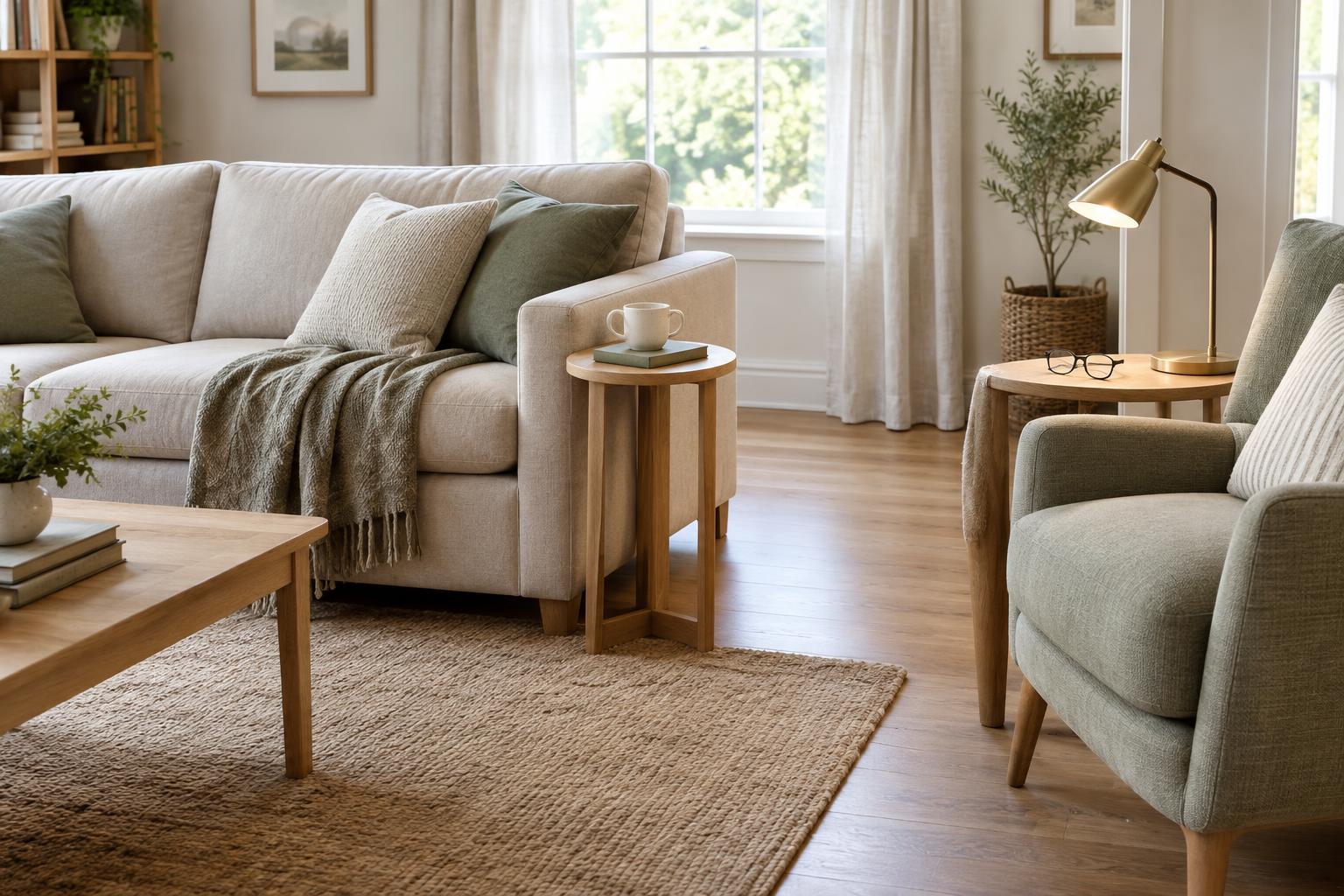
Beside a sofa or armchair, position the table close to the arm rather than lining it up with the back of the furniture. Sit down and test the placement with an empty cup: you should be able to set it down and pick it up without stretching. If the table serves two seats, try it from both. Moving it a little toward the person with the longer reach may still leave the other person struggling, so let the more difficult reach guide the final position.
Height matters as much as distance. A surface near the height of the chair or sofa arm is often comfortable because you can see and reach what is on it easily. A noticeably lower table may suit a casual lounge chair, but can make drinks awkward to place. A much higher one can feel intrusive beside a low seat. Test the pairing while seated instead of relying on how the pieces look while standing.
Keep the usable part of the top clear. If a lamp, large vase or stack of books fills the whole surface, the seat effectively has no side table. Choose a smaller accessory or a table with another shelf if the surface needs to hold several things.
Protect the routes through the room
A convenient table should not make people step around it. Check the route past the sofa, between chairs and toward doors or storage. Pay particular attention to corners and table legs, which can catch a foot even when the tabletop seems out of the way. If a table interrupts a frequently used path, move it to the other side of the seat or choose a slimmer shape.
Consider what happens when the room is in use, not only when it is tidy. Recliners need space to open, swivel chairs need room to turn, and people need to get up without brushing against a tabletop. Pull-out drawers and nearby cabinet doors also need room to work. If a table holds a lamp, keep its cord away from walking routes and place the lamp where it will not be knocked when someone stands up.
Match the table to the gap
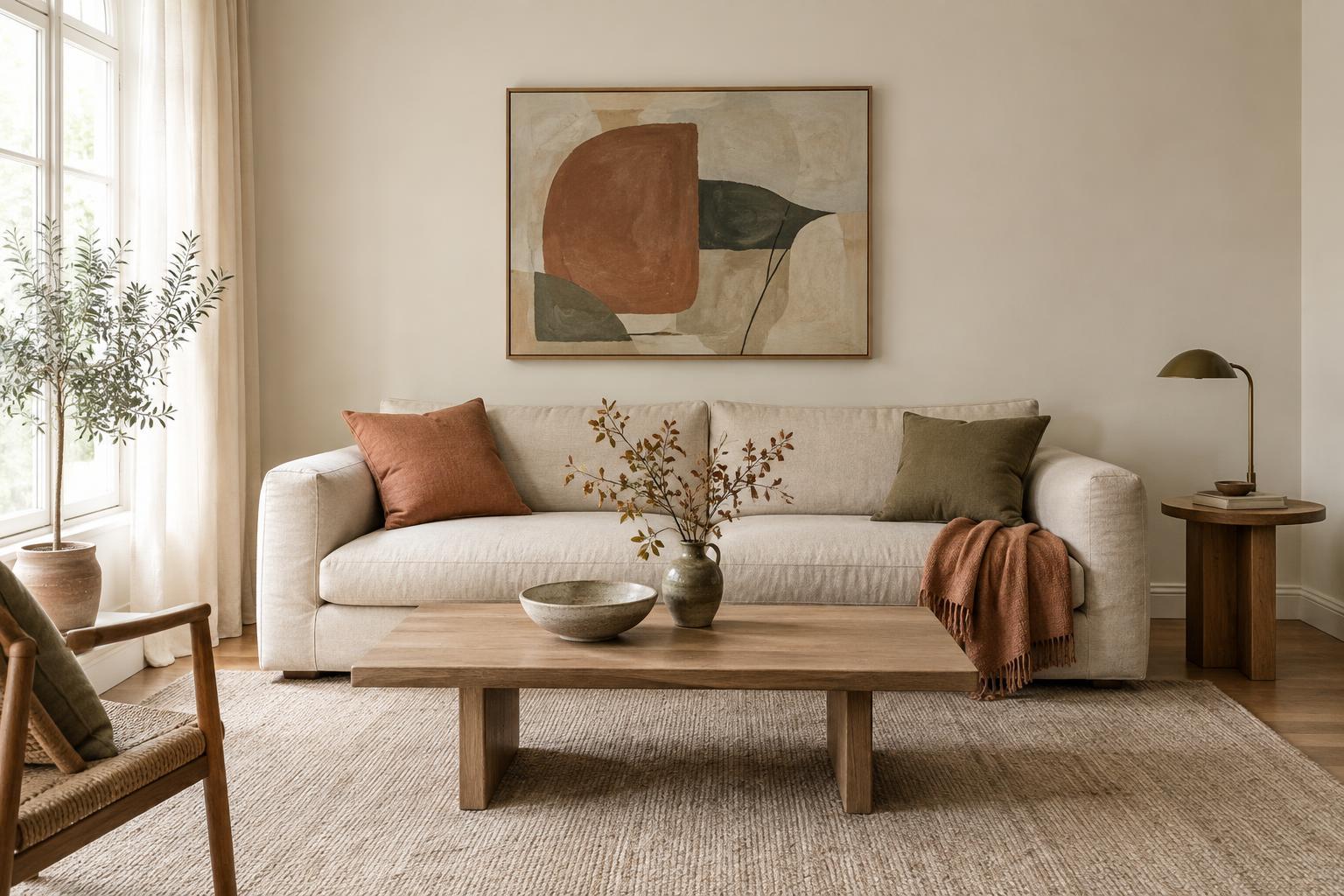
The best shape depends on the space available. A narrow table can fit beside a sofa where a broad square table would block the passage. A small round table can soften a tight arrangement between chairs because it has no projecting corners. If there is no room beside a seat, a compact table positioned slightly forward may work, provided it remains easy to reach and does not crowd the floor in front of the chair.
Look at the base as well as the top. A table with a broad, stable base may be reassuring beside an active family seating area, while a lighter-looking design can keep a compact room from feeling crowded. Whatever the style, check that the table sits firmly on the floor and does not wobble when you place something on its edge. A beautiful table is a poor match for a seat if using it feels precarious.
Fine-tune the arrangement in daily use
Once the tables are placed, live with the arrangement for a few days. Notice whether people actually use the surfaces or keep reaching for a coffee table instead. Watch for cups left on sofa arms, books placed on the floor or chairs that are difficult to leave. These small habits reveal where a table needs to move more clearly than a view of the room from the doorway.
Make one adjustment at a time: shift a table closer, swap it with a smaller one or clear space on its top. Then sit down and test it again. The goal is not to give every seat an identical table. It is to give each regular sitter a sensible place for the things they want close at hand, while keeping the room comfortable to move through.