Start with a table you can use, not just admire
An everyday summer table should be ready for breakfast, a quick lunch or a lingering evening meal. Before choosing decorations, think about how the space is used. Do plates get passed around? Do children need room to draw between meals? Is the table outdoors, where a light breeze might move loose napkins? Keep enough clear surface for serving dishes and comfortable elbows, then add only what earns its place.
You do not need a full change of tableware to create a seasonal feel. A familiar set of plates can look different against a lighter cloth or a fresh colour combination. Begin with what you already own, remove anything that makes the table feel crowded, and choose one or two details to repeat. That small amount of consistency makes an informal setting look considered.
Choose a base that handles spills
For a low-effort foundation, leave an attractive tabletop uncovered and use wipeable placemats. If you prefer a softer look, try a machine-washable tablecloth or runner in a colour that works with your usual dishes. Check the care label before buying; a beautiful fabric is less useful for daily meals if it needs more attention than you want to give it. Textured or patterned cloth can also make small marks less noticeable between washes.
Consider how each layer behaves during a meal. Placemats should sit flat beneath plates, and a runner should leave space for glasses near the table’s edge. Outdoors, lightweight fabric may need securing or replacing with heavier mats. Keep hot serving dishes on suitable trivets rather than assuming a cloth or decorative mat will protect the surface underneath.
Build a simple summer palette
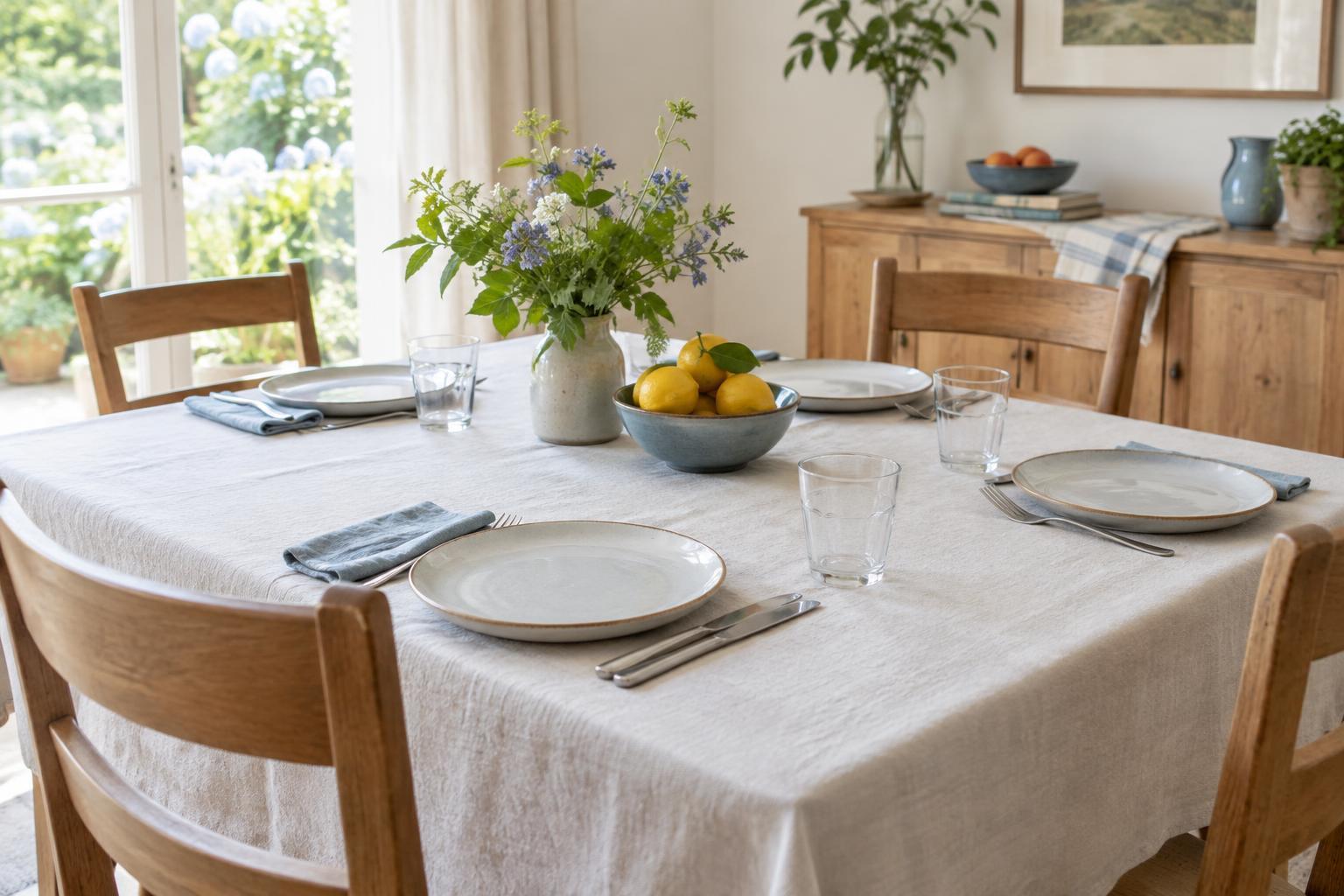
An easy way to coordinate the table is to start with a neutral base and add one summer accent. For example, cream dishes and natural-looking mats can sit alongside soft blue napkins; white plates and a pale green cloth can be warmed with wood-toned serving pieces. The exact colours matter less than the balance: repeating an accent a few times feels calmer than introducing a new shade with every item.
Materials can provide variety without making the setting busy. Smooth ceramic plates, woven-look mats and plain cotton napkins bring different textures to the table. For daily use, choose versions that suit your cleaning routine. If a woven surface traps crumbs, reserve it for occasional meals and use an easier-to-wipe alternative on busy days.
Keep the place settings relaxed and practical
Set out only what the meal requires. A plate, glass, napkin and necessary cutlery are enough for most everyday settings; extra pieces can stay in a drawer until needed. Stack small bowls nearby for berries, sauces or shared snacks instead of putting one at every seat by default. This keeps the table adaptable and reduces the washing up.
Reusable napkins add colour and softness without needing an elaborate fold. Lay each one beside a plate or place it loosely underneath the cutlery. If cloth napkins suit your household, keep enough on hand to replace soiled ones without immediately doing laundry. For outdoor meals, sturdier glasses and dishes may be easier to manage than pieces that feel delicate, especially when people are carrying food between spaces.
Finish with details that leave room for dinner
Choose a low, compact centrepiece so everyone can see across the table and reach the food. A small bowl of fruit, a short vase of greenery or a single favourite object can be enough. Avoid scattering tiny decorations across the surface; they tend to get in the way when dishes arrive. If you use flowers or foliage, place them where fallen petals or leaves will be easy to clear.
Make the finished table easy to reset. Keep clean napkins, placemats and a cloth within reach, and give the centrepiece a nearby home when you need extra serving space. After a meal, clear dishes, wipe or shake out the base as appropriate, and put back only the pieces you use regularly. The result is a table that feels summery at the start of the meal and remains simple to live with afterward.