Sort by how you decorate, not just by season
Before putting decorations away, gather them in one place and decide what you are likely to use again. Set aside anything broken, worn beyond repair or no longer suited to your home. Keeping fewer pieces makes the remaining collection easier to see and use. If you are unsure about an item, place it in a small “decide later” box rather than letting it disappear among your favourites.
Group the pieces you keep according to how you use them. A box labelled “autumn table” may be more helpful than a large box labelled “autumn” if you usually decorate the dining area first. You might make separate groups for the front door, mantel, table and soft furnishings. Keep versatile items, such as plain candleholders or neutral vases, with your everyday decor if you reach for them throughout the year. This leaves seasonal storage for pieces that genuinely need to be brought out and put away.
Choose containers that suit the contents
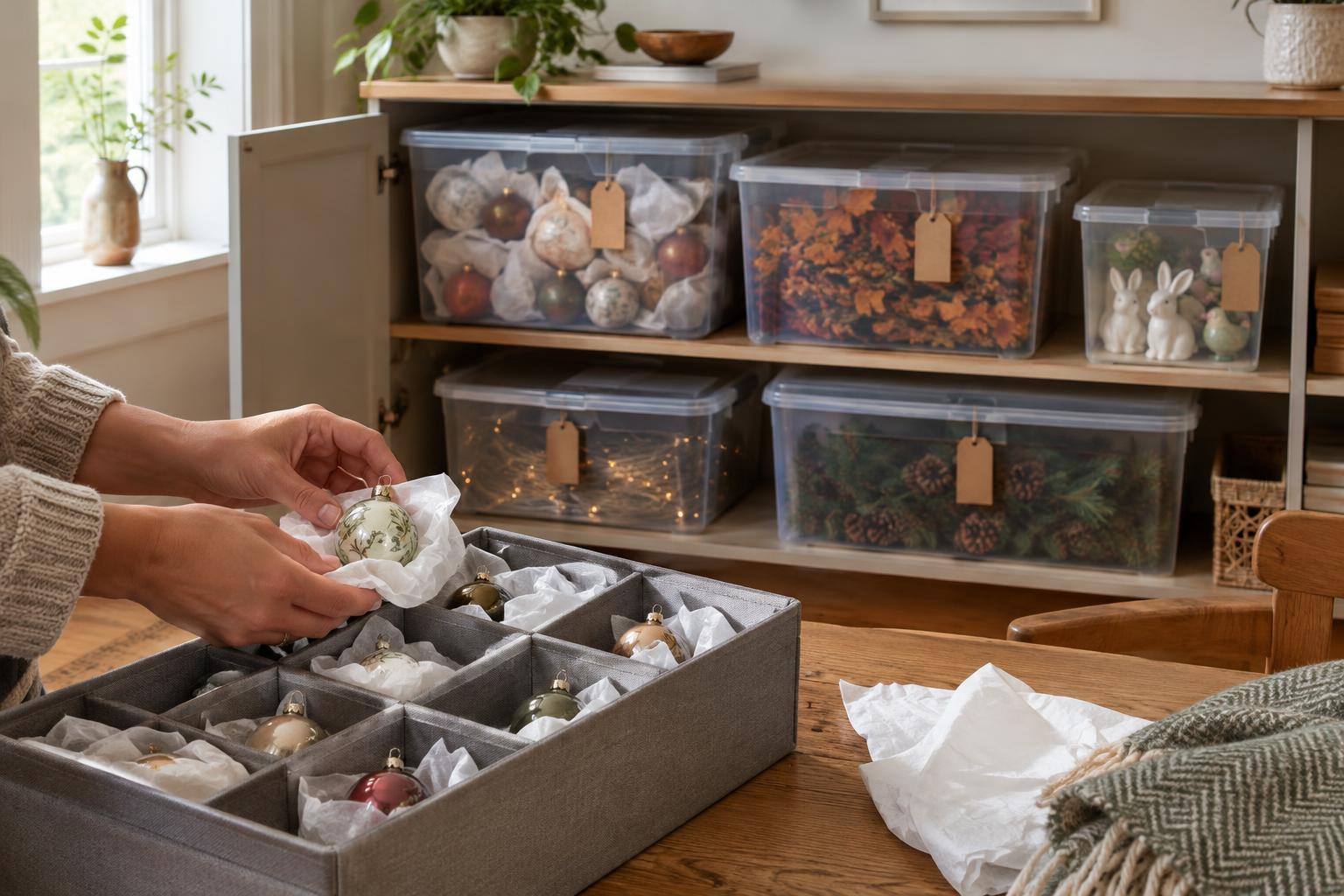
Use containers you can lift comfortably, especially if they will go on a high shelf. Several manageable boxes are often easier to handle than one oversized box full of mixed decorations. Sturdy containers with well-fitting lids help keep dust out; in a damp storage area, choose a drier location where possible rather than relying on a container alone to protect the contents.
Give fragile objects their own protection. Wrap each ornament or ceramic piece separately and use dividers or smaller boxes to stop items knocking together. Avoid placing heavy pieces on top of delicate ones. For fairy lights, loosely wind each strand around a card or reel and secure the ends so they do not tangle with other items. Remove batteries from battery-powered decorations before storage, and keep the batteries somewhere appropriate for their type.
Textiles need a different approach. Clean and fully dry cushion covers, throws or fabric garlands before packing them, then fold them without crowding the container. If a fabric is easily creased, give it room rather than compressing it beneath heavy objects. Keep scented items away from textiles if you want the fabric to smell neutral when it comes out again.
Make labels useful at a glance
A good label answers two questions: what is inside, and where does it belong? “Winter living room: cushion covers, paper stars and mantel decorations” is more useful than “winter stuff.” Put labels on the front and top of each container so you can read them whether boxes are stacked or shelved. If several boxes belong to one season, number them and note which one holds the pieces you usually need first.
For a larger collection, keep a short inventory on your phone or a sheet of paper near the storage area. It need not list every ornament. A simple record such as “Box 3: spring table linens and vase decorations; upper cupboard” can save you from opening several boxes to find one item. Add a note when an awkward or fragile piece has its own storage spot.
Arrange storage around the next time you will use it
When returning boxes to a cupboard, shelf or storage room, think about the order in which you will want them again. Put the next season’s decorations within easy reach and place less frequently used items farther back. Keep everyday storage access clear so taking out one box does not require moving the entire collection.
If space is limited, nesting smaller, protected groups inside a larger labelled container can work well. Keep the contents in a consistent order, with lighter or more delicate pieces on top. Avoid filling a box so completely that you have to force the lid shut. Leaving a little room also makes packing up less frustrating if you add a new decoration during the season.
Build a small reset into the packing-away routine
The easiest moment to improve your system is when you take decorations down. Check pieces as you pack: untangle lights, look for chips or loose parts, and put items that need attention in a clearly marked repair box. Do not return a damaged item to its usual box and expect to remember it months later.
Before closing each container, place a brief note on top about anything missing or needed next time, such as a replacement hanging hook. Then return the box to its labelled spot. Seasonal decorating becomes simpler when storage reflects the way you actually use your home: the right pieces are grouped together, protected between outings and easy to find when you are ready for a change.