Start with the textiles you actually use
A summer refresh works best when it responds to how your living room feels, not just how it looks. Notice which textiles make the space feel heavy: perhaps a thick throw stays folded on the sofa, dark cushion covers dominate the seating, or lined curtains block more light than you want. You do not need to replace everything. Swapping a few visible, frequently used pieces can change the room while leaving its comfortable foundation intact.
Before putting anything away, keep one or two soft essentials within reach. A light blanket is still useful for a cool evening, and cushions make a sofa pleasant to sit on regardless of the season. The aim is to exchange weight and texture, rather than remove every layer. If a sofa has a firm seat, retain cushions that provide support and change only their covers.
Choose fabrics by feel and upkeep
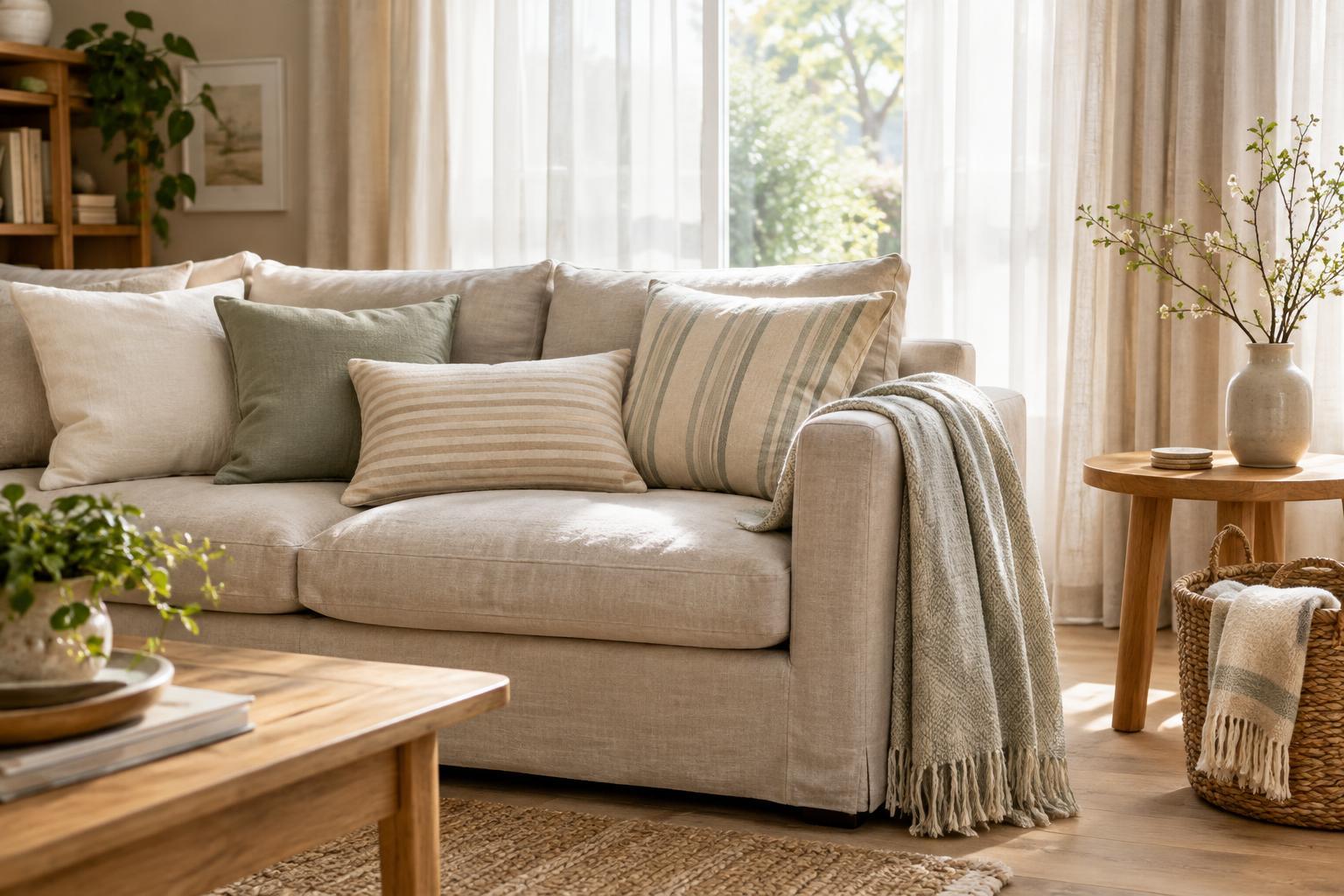
For cushion covers and throws, look for fabrics that feel pleasant against skin and suit the amount of use they will get. Cotton is a versatile choice for everyday covers, while linen offers a relaxed texture that can look good with a little creasing. Lightweight woven blends may be useful where easier care or a smoother finish matters. Fabric names alone do not tell the whole story: a tightly woven cotton can feel more substantial than a loose linen, so consider the weight and weave as well as the fibre.
Keep comfort in mind when choosing texture. A coarse weave may look airy but feel scratchy when someone rests an arm against it. If your living room gets frequent use, removable, washable cushion covers can be more practical than delicate decorative pieces. Check the care label before buying, especially if you want to wash several covers together. For throws, choose one large enough to cover someone comfortably without bringing back the bulk of a winter blanket.
Lighten the palette without losing warmth
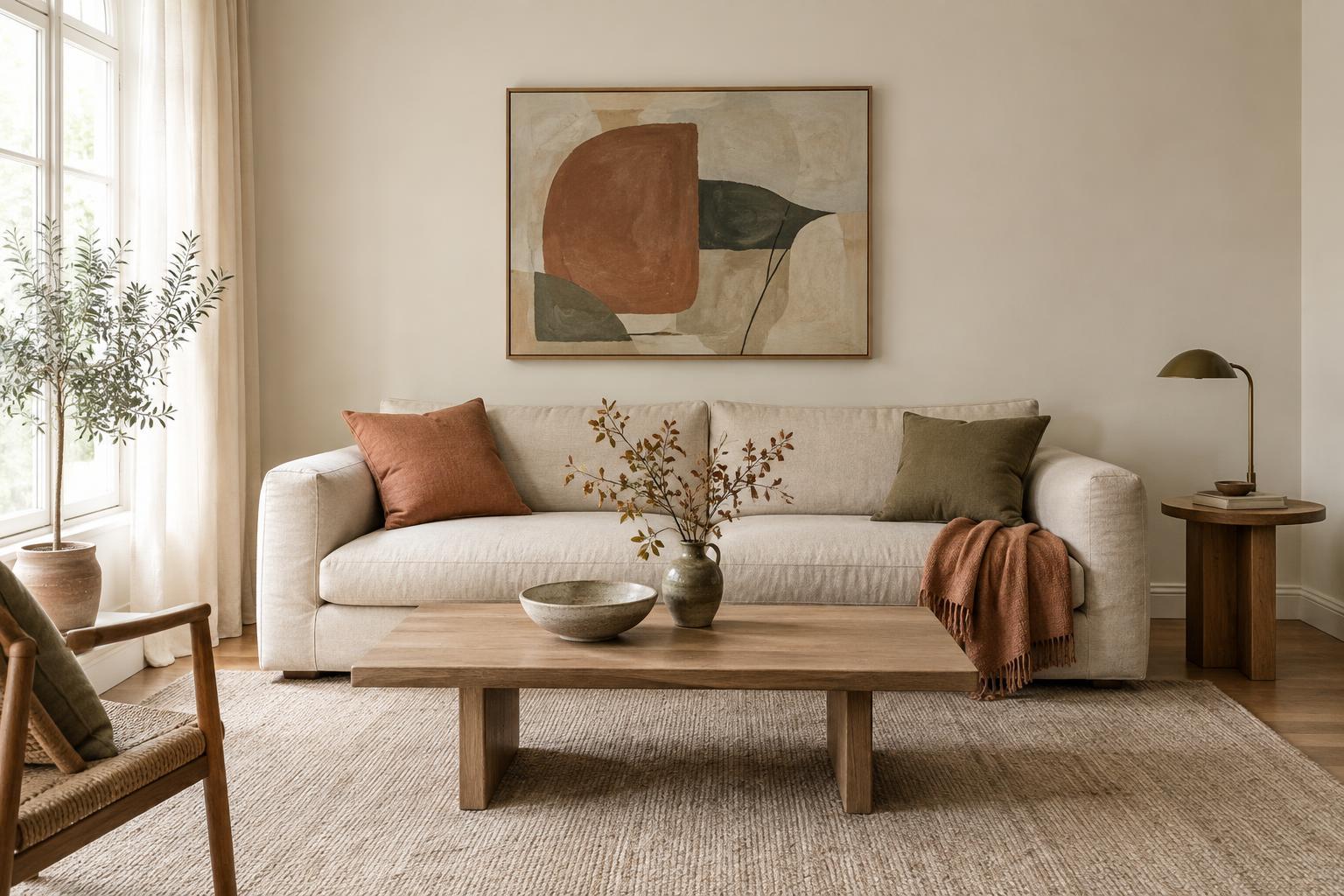
Summer colours do not have to be bright white or coastal blue. Start with colours already present in the room, such as a rug, artwork or sofa upholstery, and choose lighter versions or quieter companions. Warm cream can soften a charcoal sofa; pale olive can sit comfortably beside wood; dusty blue can cool a room with warm-toned walls. Repeating one existing colour helps new textiles look connected rather than temporary.
Use pattern in small amounts if the seating area already has several visual elements. One striped or botanical cushion can add energy among plain covers, while a mix of subtle weaves provides interest without a busy print. If you love deeper colours, keep one as an accent instead of removing it completely. A dark piping detail or a single rich-toned cushion can give pale summer fabrics a sense of balance.
Adjust curtains for light, privacy and glare
Curtains can have a greater effect on the room than a pile of cushions, but a lighter look should still meet your practical needs. Sheer panels can soften daylight and add movement, though they may offer limited privacy when interior lights are on. If privacy or glare is a concern, consider keeping a more substantial layer alongside them. Lightweight curtains can also look summery without being transparent.
Before changing window textiles, observe the room at the times you use it most. Afternoon sun across a television or favourite chair may call for more coverage than a bright morning window. Choose a length that suits the room and check that new panels can open and close easily. A curtain that looks airy but gets in the way of daily routines is unlikely to feel like an improvement.
Make the swap easy to live with and repeat
Arrange your summer textiles around use rather than symmetry. Put supportive cushions where people sit, leave enough clear sofa space to relax, and keep a throw within reach instead of draping it where it will slide off. Try the arrangement for a few days before deciding whether it needs another colour or texture. Often, removing one extra cushion makes the remaining selection look more intentional.
When you store heavier covers and throws, clean and dry them according to their care labels first. Fold them loosely in a clean, dry place and label the container if you rotate several sets. There is no need to create an entirely new look each year: a small collection of textiles that works with your existing furniture makes seasonal changes quicker, less wasteful and more comfortable.