Start with the plant and its place
Before choosing a decorative pot, decide where the plant can live comfortably. A bright windowsill, a shelf set back from the window and a dim corner offer different conditions. Check the needs of the plant you have, then look for a display spot that suits it. A beautiful stand will not compensate for too little light, and a leafy plant may need more space around it as it grows.
Consider how the plant will look from the places you use most: the sofa, dining table or doorway. A broad plant can soften an empty corner, while a smaller one may bring life to a side table. Leave enough room to pass without brushing the leaves. If a plant needs regular watering or turning, make sure you can reach it without moving several other objects first.
Choose pots that fit the plant and the room
A pot should feel proportional to both its plant and its surroundings. A tiny plant can disappear inside an oversized decorative container; a large plant may look top-heavy in one that appears too small. When using a decorative outer pot, check that the growing pot sits inside it comfortably and can be lifted out for care. This makes it easier to manage excess water and change the display later.
Use colour and finish to connect the plant with the room. A matte ceramic pot can echo painted walls or soft textiles, while a glazed finish adds a little shine beside wood and woven materials. You do not need matching pots throughout the room. Repeating one element, such as a warm neutral colour or a simple rounded shape, can make different containers feel related. Let the foliage provide some of the variation.
Use stands to create height and breathing room
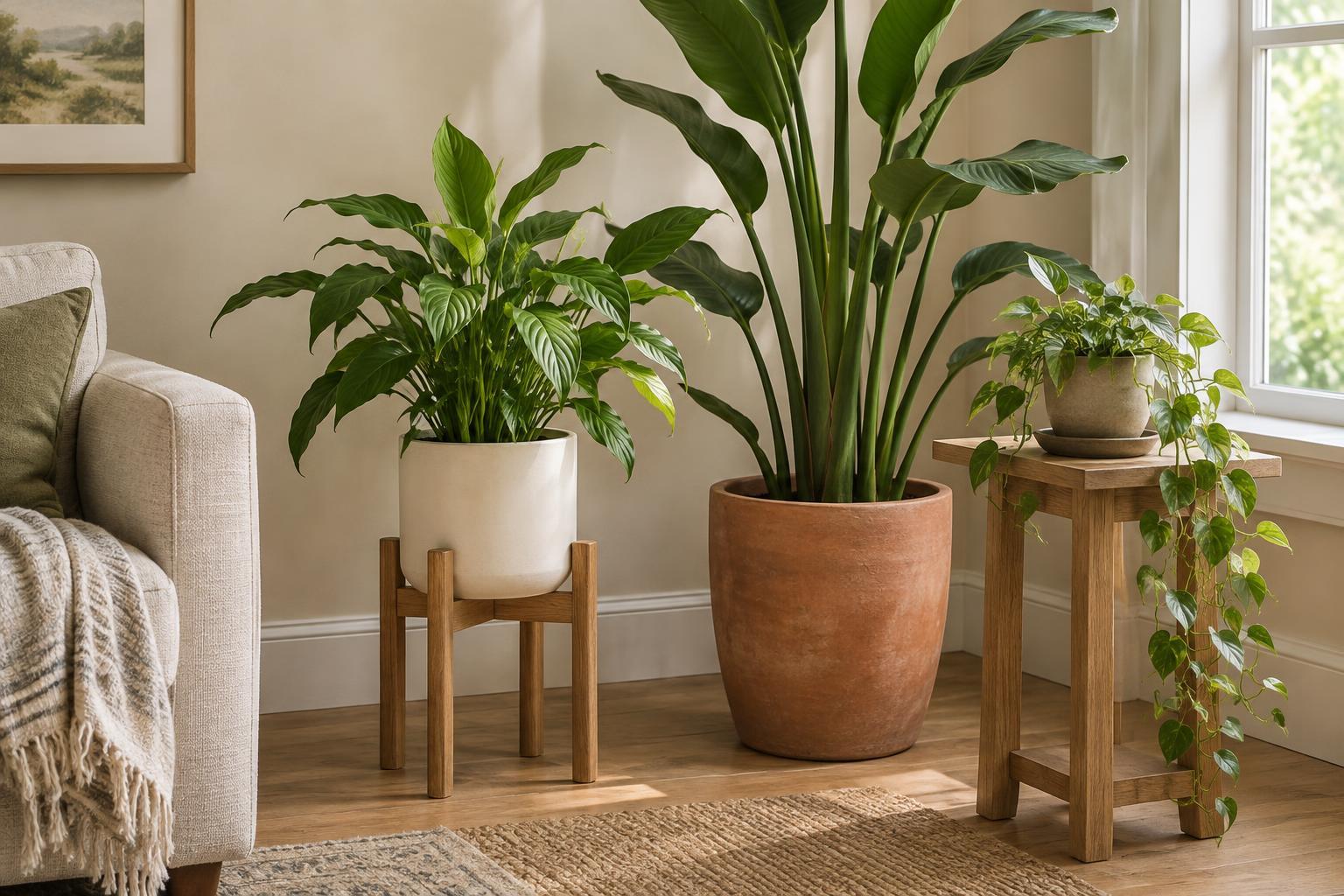
A stand raises a plant into view and can make a display more useful in a room with limited tabletop space. Choose its height by looking at the whole arrangement, including the plant's leaves. A tall stand beneath an already tall plant may block a window or crowd nearby furniture. A low stand, by contrast, can lift a floor plant just enough to distinguish it from a group of objects beside it.
Varying heights helps a collection look considered without making every plant compete for attention. Try placing one plant on the floor, one on a modest stand and one on a shelf, with a little space between their leaves. Keep stands steady and appropriately sized for the pots they hold. Place heavier plants where they are unlikely to be knocked, especially near walkways, children or pets.
Build a display with a clear point of view
For a grouped display, begin with one plant that has a strong shape or generous foliage. Add smaller plants that contrast gently in leaf size or growth habit. An odd number of containers can be easy to arrange, but balance matters more than a rule: move the pots until no single side feels crowded. Allow gaps so each plant remains visible and there is room to water it.
Pots and stands can also help connect plants to the rest of the décor. Near a wooden cabinet, a timber or warm-toned stand may make the arrangement feel settled. On a minimal shelf, two simple pots might work better than a busy collection. If the room already has many patterns and objects, keep the containers restrained. If it feels sparse, a textured pot can add detail without introducing another decorative item.
Protect surfaces and leave room for care
Plan for water before placing any pot on a floor, shelf or piece of furniture. A growing pot with drainage holes needs a suitable saucer or outer container to catch runoff. Empty collected water rather than leaving the pot sitting in it. If you water a plant in a sink and let it drain before returning it to its display, check that the base is dry. A tray or other protective layer can be useful on surfaces that may mark easily.
Finally, treat the arrangement as something you can adjust. Leaves may spread, a plant may need a different light position, or a stand may prove awkward when you clean. Small changes in spacing or height often make a greater difference than buying another pot. The best display looks welcoming from across the room and remains simple to live with up close.