Start with the fibre, but do not stop there
Upholstery covers a large, visible part of a chair or sofa, so its fabric affects both the mood of a room and how the furniture feels to use. Natural fibres such as cotton, linen and wool are often chosen for their varied texture. Synthetic fibres such as polyester, nylon and acrylic can offer a more consistent appearance and are available in a wide range of colours and finishes. Neither group is automatically the better choice.
Fibre content is only one part of the decision. A tightly woven cotton may behave differently from a loose cotton weave; a smooth polyester velvet will look and feel different from a textured polyester fabric. Blends combine fibres to achieve a particular appearance or handling quality. The weave, pile, dye, backing and applied finish can all affect durability and cleaning. When comparing samples, look at the full fabric specification rather than judging it by a single fibre name.
Compare the look in your room
Natural-fibre fabrics can bring subtle variation that suits a relaxed, layered interior. Linen often has a slubby surface and a casually rumpled look, while cotton ranges from crisp canvas-like cloth to soft, brushed textures. Wool can add visual warmth, especially in a pronounced weave. These qualities may be appealing if you want upholstery to sit comfortably beside wood, ceramics or woven accessories.
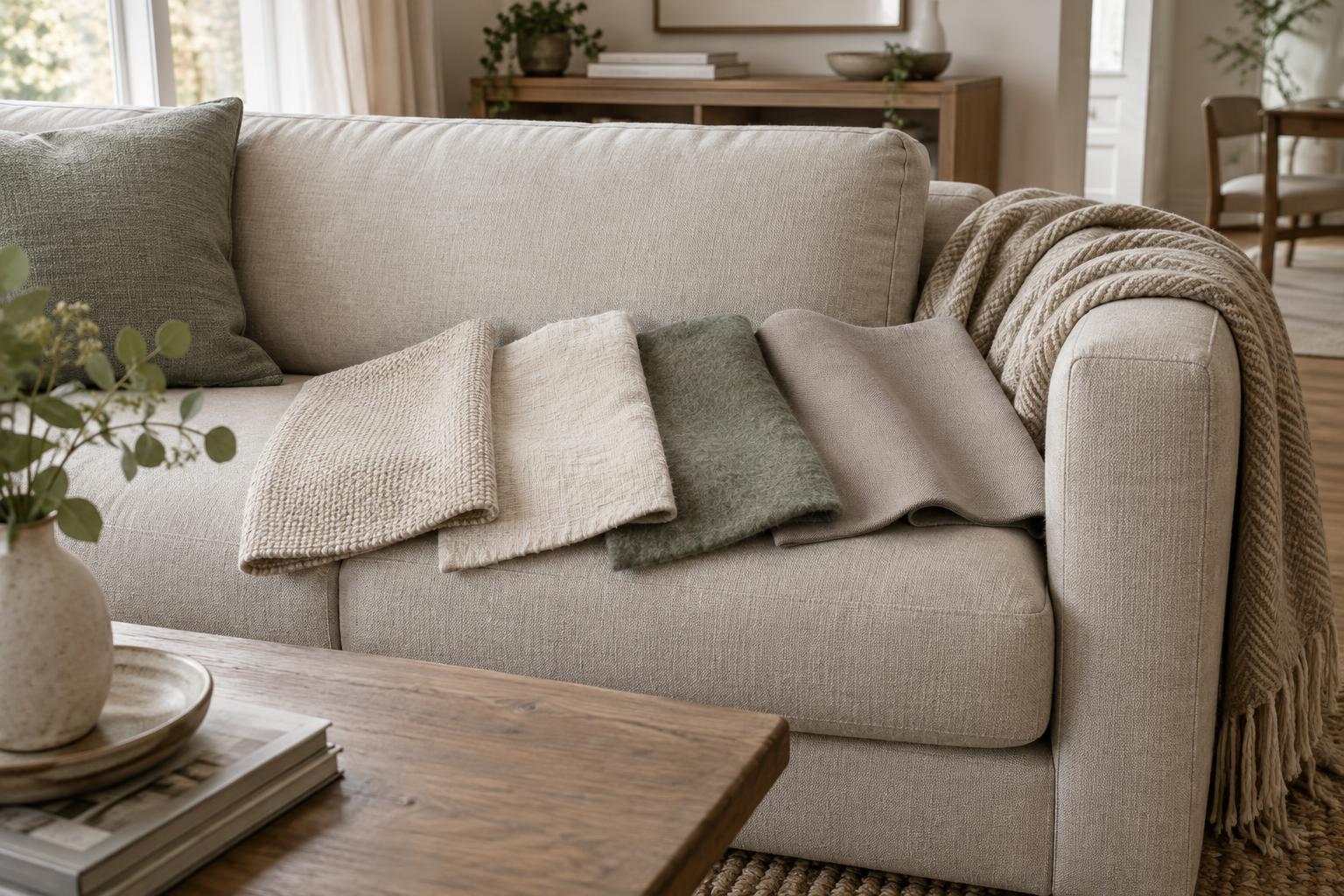
Synthetics are not limited to sleek or shiny surfaces. Polyester, for example, can be made into matte weaves, nubby textures and soft piles. This makes it useful when you want a particular colour or finish without relying on the behaviour of a natural fibre. Examine samples beside your curtains, rug and cushions in the room where the furniture will live. A fabric that looks neutral under a shop light may appear warmer, cooler or more textured at home.
Consider how much change in appearance you welcome. Some fabrics show creases, surface shading or a softened look with use; others retain a tidier visual impression. Ask for a sample large enough to see the weave, not just the colour, and view it both flat and draped over the furniture.
Think about comfort and daily use
Comfort depends on more than whether a fibre is natural or synthetic. Seat construction, fabric weight, weave and surface finish influence the experience. Cotton and linen may feel pleasantly dry to the touch, although their feel varies widely. Wool can feel cosy, but a coarse weave may not appeal to everyone. Synthetic fabrics can feel smooth and soft; some dense surfaces may feel warmer against the skin than a looser weave.
Think about where the piece will be used. A reading chair may invite a textured fabric you enjoy touching, while a family sofa may call for a surface that tolerates frequent contact and is straightforward to maintain. If possible, sit on furniture upholstered in the fabric rather than choosing from a hanging swatch alone. Notice whether the surface feels comfortable through ordinary clothing and whether its texture suits the room’s atmosphere.
For a sunny room, ask how the specific fabric responds to light rather than assuming one fibre category will resist fading. If pets use the furniture, also consider whether the weave gives claws an easy place to catch. A close weave may be more practical than a highly looped or open texture, whatever the fibre content.
Let the care label guide cleaning plans
A fabric that suits your decorating scheme also needs to suit your willingness to care for it. Natural fibres can vary in their response to moisture, rubbing and cleaning products. Synthetic fibres may be easier to wipe or spot-clean in some constructions, but that is not a universal rule. Finishes and blends can change what is safe, and the upholstery’s backing or padding may impose limits even when the visible fibre seems washable.
Before buying, check the maker’s care instructions and any cleaning code supplied for the finished furniture. Ask whether cushion covers can be removed and, if so, whether they are intended to be washed. Removable does not necessarily mean machine-washable. For spills, follow the stated instructions promptly and test any permitted cleaner on a hidden area first. Avoid aggressive scrubbing, which can alter a fabric’s surface.
Routine care is usually simpler than stain removal: vacuum gently with an appropriate attachment, attend to crumbs before they work into the weave and rotate loose cushions if the furniture design allows it. These habits help keep texture and colour looking more even.
Make a choice that fits the whole space
Begin with the look you want, then narrow your options by how the furniture will be used. If you love the character of linen but want a neater appearance, compare linen blends and different weaves. If you favour the easygoing look of a textured synthetic, examine its surface in daylight and check its specific care guidance. A fibre label can point you in a direction, but a sample and a realistic cleaning plan should make the final decision.
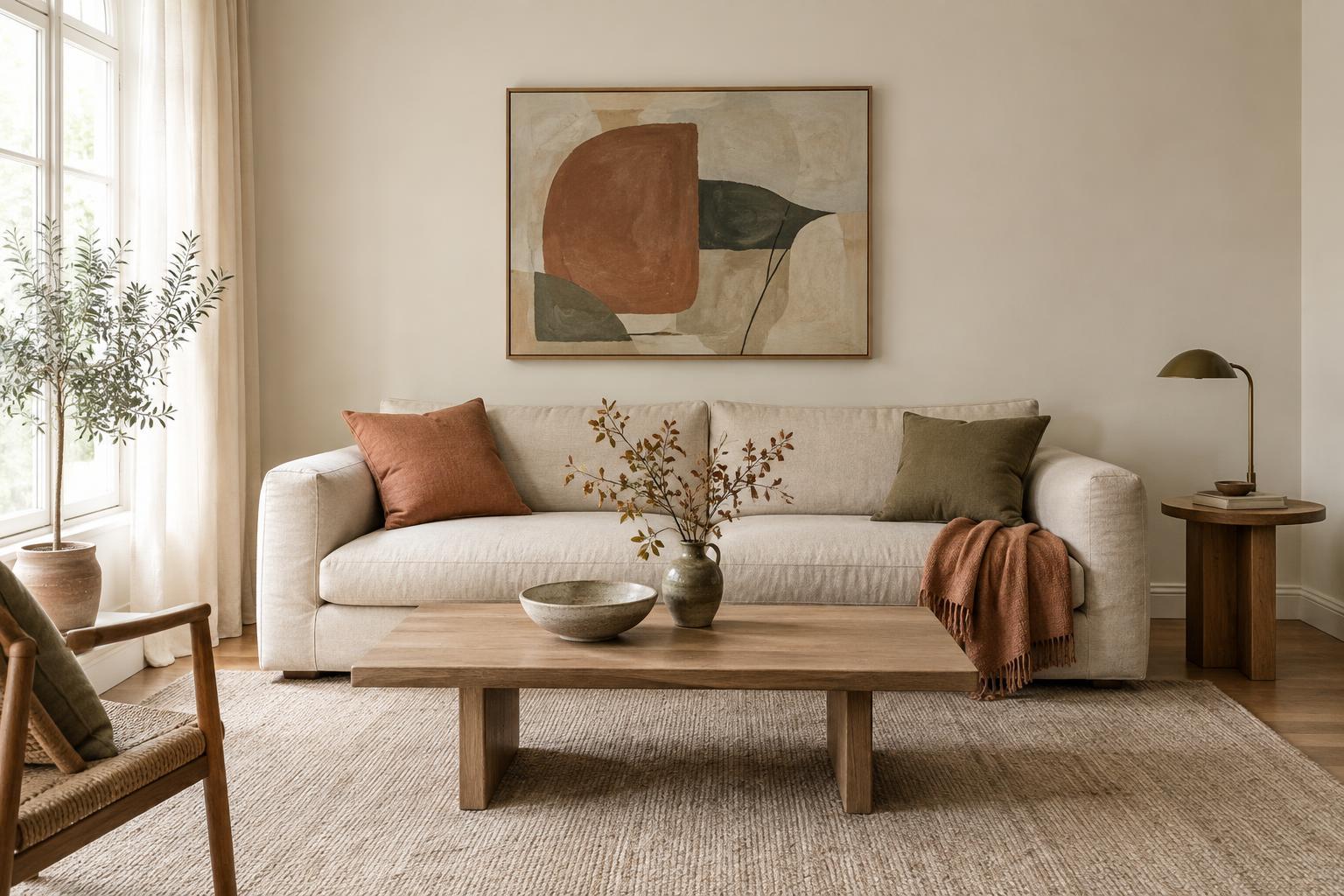
Finally, give upholstery a role in the room’s colour and material mix. A richly textured sofa can provide contrast against smooth painted walls; a quieter fabric can let patterned cushions or curtains stand out. Choose the surface you will enjoy seeing and sitting on regularly, not simply the one that sounds best on paper.