Start with the weave, not the label
Percale and sateen are weave styles. They describe how threads are arranged, rather than what the threads are made from. Both are commonly made with cotton, but fibre quality, yarn thickness, finishing and construction also shape how a sheet feels. That is why two sets labelled “percale” may not feel identical, and a fibre label alone cannot tell you whether a sheet will be crisp or smooth.
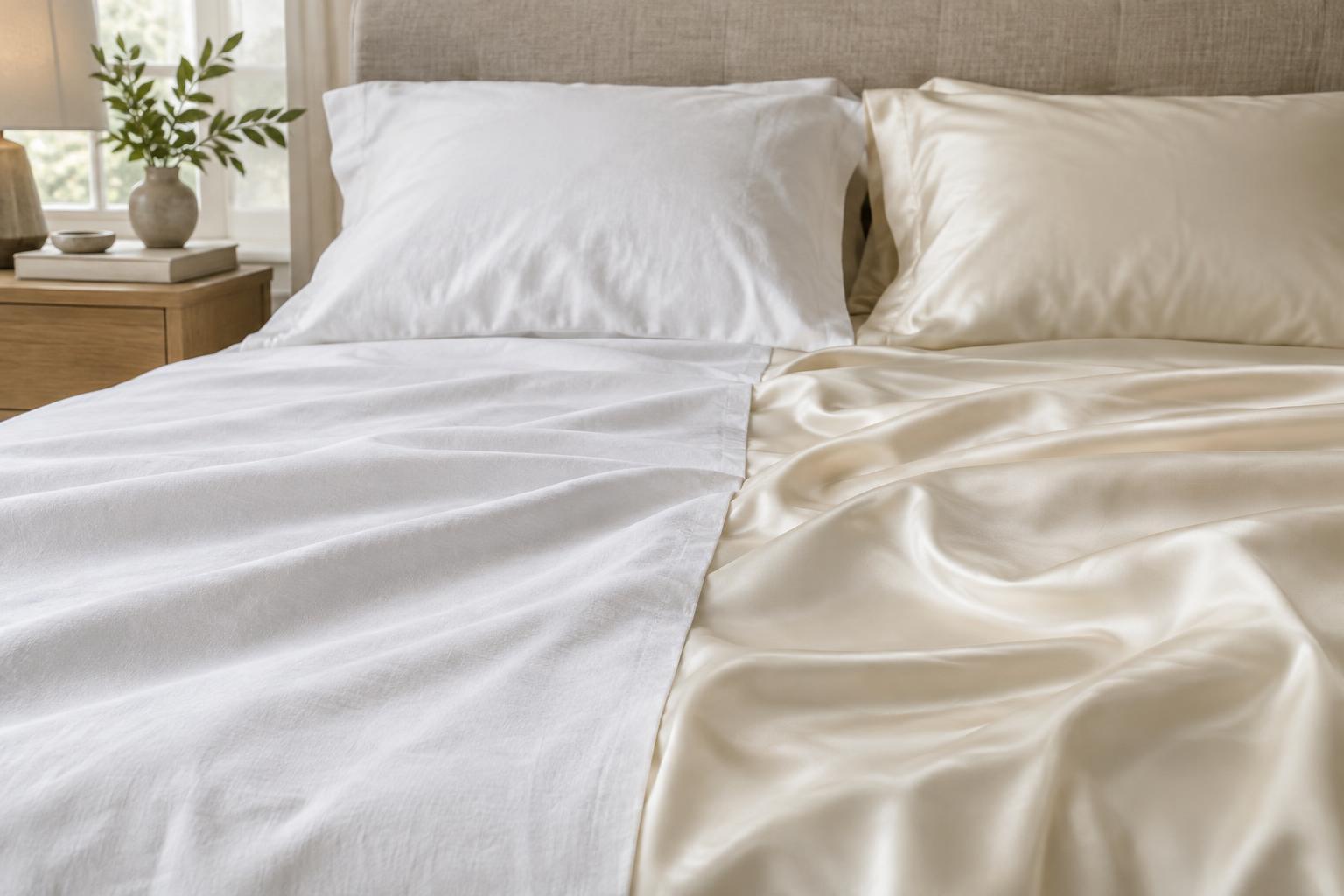
Percale uses a simple over-and-under weave that usually produces a balanced, matte fabric. Sateen is woven to leave more thread exposed on the surface, which typically creates a smoother feel and a subtle sheen. Neither is automatically the better choice. Think of the weave as a useful starting point, then consider the particular fabric, your preferred sleeping feel and the amount of upkeep you are happy to do.
Compare the feel against your sleeping preferences
Percale often feels cool and crisp when you first get into bed. It can appeal if you like sheets with a little structure rather than a draped, silky sensation. Some sets soften after repeated washing while retaining their characteristic feel. If a new percale sheet feels firmer than expected, check the care label and give it a few washes before deciding whether it suits you.
Sateen tends to feel smoother against the skin and to drape more closely over the bed. That softer, less crisp sensation may feel inviting if you prefer a cosy bed. People often describe percale as airier and sateen as warmer, but temperature depends on more than weave: fibre, fabric weight, bedding layers and room conditions all matter. If warmth is your main concern, assess the whole bedding setup rather than relying on the weave name alone.
Consider how the sheets will look on the bed
Percale’s matte finish gives a bed a relaxed, understated look. It pairs easily with textured throws, patterned cushions and other materials because it does not compete for attention. Its crispness can make a freshly made bed look neat, though folds and creases may remain visible after sleeping or laundering. If you enjoy an informal, lived-in bedroom, those wrinkles may be part of its appeal.
Sateen has a gentle lustre that can make plain colours look a little more dressed up. Its fluid drape works well with soft layers and simple, tonal styling. It generally looks less sharply creased than percale, although it is not wrinkle-proof. To compare the finishes fairly, look at samples in the light of your own room if possible: a sheen that appears subtle in a shop may be more noticeable beside a bright window.
Plan for washing, drying and wear
Always follow the care instructions on your particular sheets, especially for washing temperature and tumble drying. In general, avoiding overloaded wash loads gives sheets room to rinse and move. Removing them promptly from the dryer, or smoothing them before air drying, can help limit set-in creases. Percale may need more smoothing or ironing if you want a very polished finish; sateen’s drape can be more forgiving.
Neither weave guarantees durability. Fibre, yarn, finishing, construction and laundering habits all influence how a set wears. Sateen’s smoother exposed surface can be more vulnerable to snags from rough objects, so it is sensible to keep zips or hook-and-loop fastenings out of the same wash load. For either weave, check seams and fitted-sheet elastic when shopping, and rotate between sets if you want to spread the wear.
Make the final choice with a few simple checks
Choose percale if you are drawn to a crisp, matte sheet and do not mind a few wrinkles. Choose sateen if you prefer a smoother touch, more drape and a softly polished look. If you share a bed with someone whose preferences differ, a pillowcase in each weave can be a low-commitment way to compare how they feel against the skin before replacing a full set.
Before buying, confirm the fibre content, mattress depth and fitted-sheet dimensions, then read the care label. Treat thread count as one detail rather than a shortcut to quality: a higher number does not, by itself, promise a softer or longer-lasting sheet. The most useful test is whether the fabric feels pleasant to you, fits the bed securely and works with a care routine you will actually follow.