Start with what the labels mean
Solid wood furniture uses pieces of natural timber for the parts described as solid. It has grain and colour variation throughout the wood, rather than just on the surface. That does not mean every part of a piece is solid: a table may have a solid top and a different material underneath. Check which components the description covers.
Wood veneer is a thin layer of real wood bonded to a stable base, often engineered wood. It offers natural grain without requiring thick timber for every visible surface. Laminate is a manufactured surface bonded to a base. It can have a wood-look pattern, a plain colour or another design, but its visible layer is not natural wood. Because labels are sometimes broad, ask what the surface is made from and what lies beneath it.
Choose the look you want to live with
If you enjoy subtle differences in grain, knots and tone, solid wood gives each piece its own character. Its colour may also change with light and age, so a new piece may not remain an exact match for nearby furniture. Veneer provides genuine wood grain too, and its thin sheets can create a more consistent appearance across broad cabinet doors or tabletops.
Laminate is useful when you want a predictable colour or a crisp, uniform finish. A plain laminate cabinet can sit quietly beside patterned curtains, cushions or rugs. If you are considering a wood-look laminate, view it in person when possible: repeated grain patterns and the treatment of corners can affect how convincing it looks.
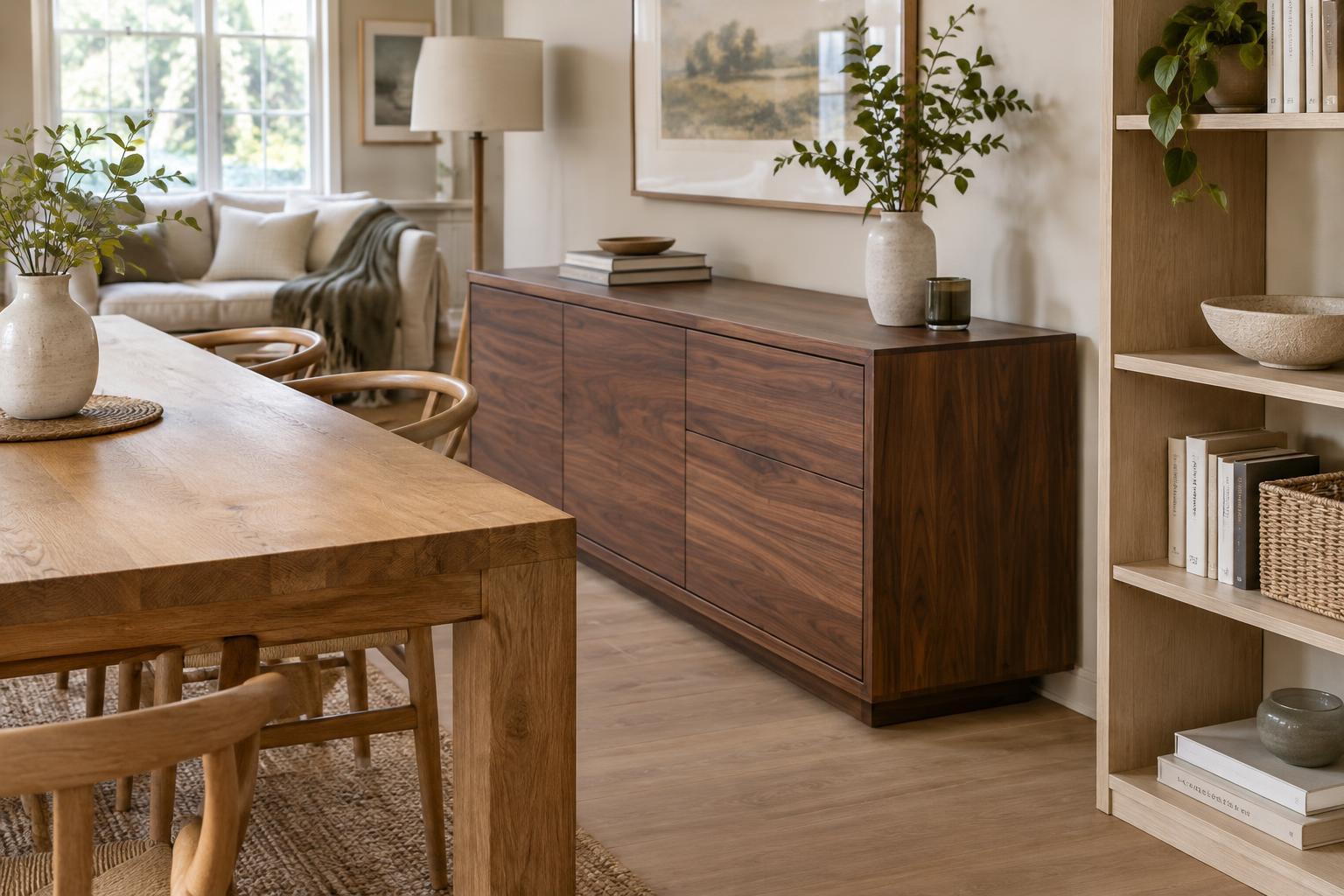
You do not need every finish in a room to match. A pale wood table can work beside a darker cabinet if they share another visual link, such as a similar warmth of colour or matching hardware. Bring samples into the room and compare them in daylight and evening light, alongside the flooring and textiles you plan to keep.
Think about wear, water and daily care
For a dining table or desk, picture the tasks that happen on its surface. Solid wood can acquire dents and scratches, especially if the timber is relatively soft, but some marks can be repaired or refinished. Wood also responds to changes in humidity, so sensible placement and care matter. The protective finish applied to the wood affects everyday maintenance as much as the species does.
Veneer needs similar care at the surface: wipe up spills promptly and avoid prolonged heat or moisture. Deep damage is harder to address when the wood layer is thin, and sanding may not be an option. Laminate is often straightforward to wipe clean, but its resistance to scratches, heat and stains depends on the particular product. A damaged laminate edge or surface may be difficult to repair invisibly.
For any of these materials, use mats under hot items, clean with a soft cloth and follow the maker’s care guidance. In a room where spills are frequent, pay particular attention to seams, exposed edges and the finish around handles. Water reaching the base material can cause problems even when the visible surface looks robust.
Look beyond the top surface
A material name alone cannot tell you whether a piece is well made. Open doors and drawers, look at the back and underside, and check whether the furniture feels steady. On veneer and laminate pieces, inspect how neatly the edges are finished, especially at corners and around drawer fronts. On solid wood furniture, look at how the parts are joined and whether doors and drawers move smoothly.
Also consider weight, size and where the piece will stand. A large solid wood table may be harder to move or carry upstairs. A veneer or laminate cabinet may offer the appearance you want at a weight and price that better suit the space. These are useful trade-offs, not signs that one material is automatically the better choice.
Match the material to the furniture
Choose solid wood when you value natural variation and want a piece that may be possible to refinish over time, provided you are comfortable with routine care and signs of use. Choose veneer when you want real wood grain on a broad, relatively consistent surface, and can protect it from heavy wear. Choose laminate when easy cleaning, a particular colour or a more controlled budget is the priority.
It can help to make the decision piece by piece. You might prefer a solid wood side table that develops character, a veneered cabinet with a calm grain, and laminate shelving in a colour that blends into the wall. Before buying, check the construction, care instructions and replacement or repair options. The best finish is the one that looks right in your room and fits the way you will use it.