Start with the look you want
Stone and ceramic can both give a room a grounded, tactile feel, but they create different effects. Natural stone often has irregular veining, speckles or shifts in tone that make each piece distinct. Marble may look polished and expressive; travertine can feel softer and more earthy. Ceramic offers a wider range of deliberately controlled colours, shapes and surface finishes, from glossy glaze to a matte, handmade-looking texture.
Neither material is automatically more elegant. A small glazed ceramic lamp can be the clearest focal point in a neutral room, while a quiet stone tray can blend into a layered arrangement. Before choosing, decide whether the surface should attract attention or provide a calm background. Look at it beside the wood, fabric and metal already in the space, rather than judging it in isolation.
Match the material to the job
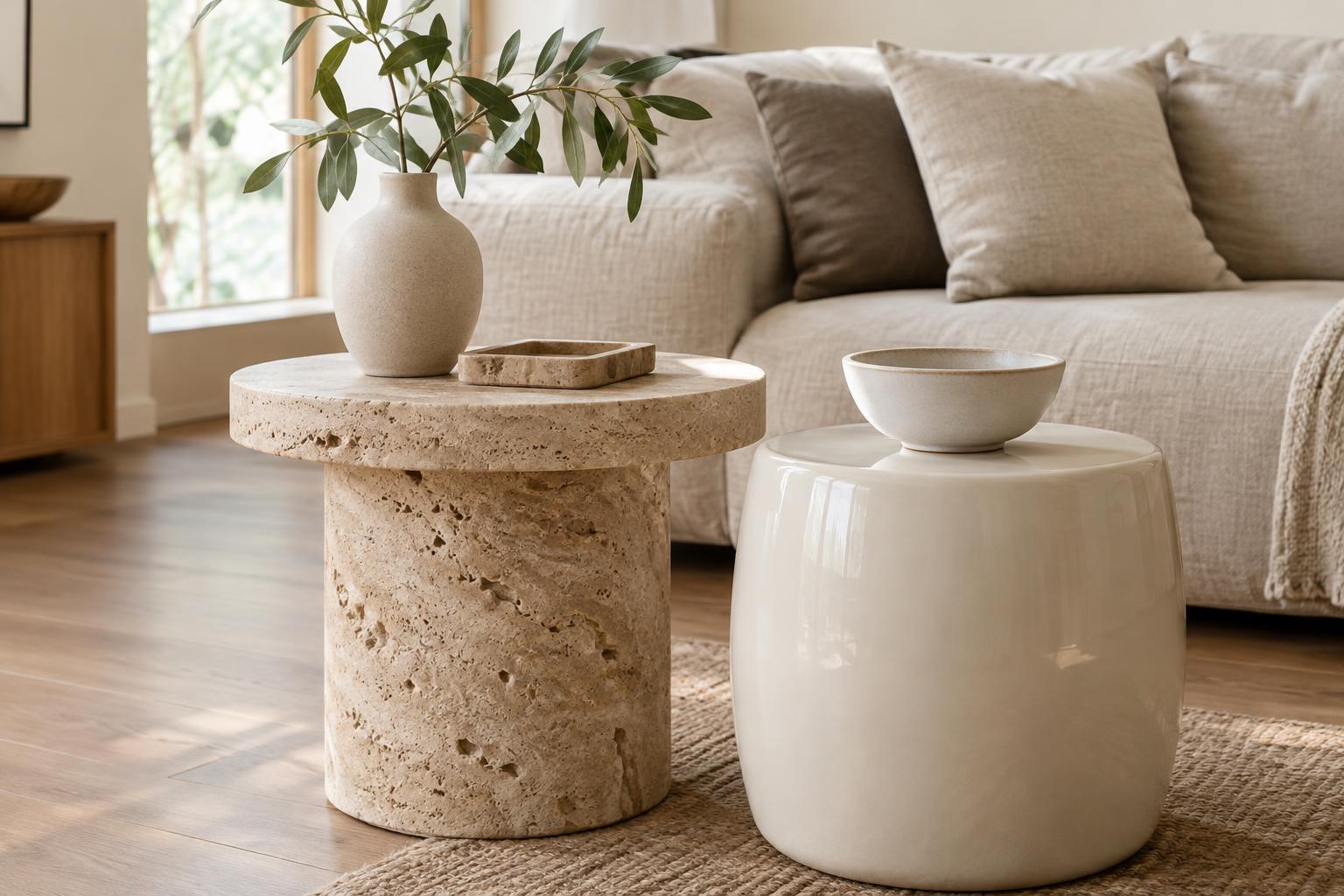
For a decorative side table, consider more than the tabletop colour. Stone tops can be heavy, so check that the base is stable and that you can move the table when needed. Some tables use a stone veneer or stone-look finish rather than a solid slab; if weight or construction matters to you, check the product description. A ceramic-topped table may offer the colour or pattern you want in a different construction, but its stability still depends on the whole piece.
Accessories have different demands. A stone bookend benefits from its weight, while a large stone vase may be inconvenient to lift or reposition. Ceramic works well for vessels and sculptural forms because it can be made in many shapes, though narrow rims and projecting details deserve careful handling. For either material, place felt pads beneath pieces that might scratch a shelf, and check that a tray or object sits flat before putting it on a delicate surface.
Think about finishes and everyday care
The finish affects how a piece behaves as much as the material name does. Some natural stones are porous and may mark when they meet oils, coloured liquids or acidic spills. A sealant can help with certain stones, but it does not make every surface stain-proof. Glazed ceramic is often easy to wipe clean, while unglazed or textured ceramic may hold onto marks more readily. Ask about the specific finish if an accessory will regularly hold drinks, flowers or toiletries.
For routine cleaning, a soft cloth and a mild cleaner suitable for the particular surface are sensible starting points. Wipe spills promptly, and avoid abrasive pads that could dull a polish or glaze. Do not assume that a stone or ceramic item is safe for hot cookware simply because the underlying material tolerates heat: finishes, adhesives and construction vary. Use a coaster or protective mat on decorative tables unless the maker’s care guidance says otherwise.
Use colour and texture to build a balanced room
Stone usually introduces visual movement through its natural pattern. If a tabletop has strong veining, let it lead and keep nearby accessories relatively simple. A softly patterned stone, by contrast, can sit comfortably beside woven baskets, linen and warm timber. Ceramic is useful when you want to repeat a precise colour: a pair of vases can pick up a shade from curtains or cushions without requiring another large furniture change.
Mixing the two can be more interesting than choosing one throughout a room. Try a matte ceramic bowl on a smooth stone table, or place a polished stone object beside a softly glazed vase. Give the pieces a shared element, such as a warm undertone or a similar shape, so the contrast looks intentional. Leave some empty surface around them; texture is easier to appreciate when every table and shelf is not crowded.
Make the final choice in the room
Light can change the impression of both materials. A glossy ceramic glaze may reflect a nearby window, while a honed stone surface may look quieter in the same spot. If possible, compare samples or view the piece where it will live, in both natural and artificial light. Check its colour against the floor as well as the walls: a tabletop that looks pale on its own can appear warmer or cooler beside surrounding finishes.
Choose stone when you welcome natural variation and its weight suits the piece. Choose ceramic when a particular colour, shape or glaze helps complete the room. In either case, check the dimensions, construction and care needs before buying. The best surface is not the one that sounds most luxurious; it is the one you will enjoy seeing and using in that specific place.