Start with what your table needs
A table runner and a set of placemats can both make an everyday meal feel considered, but they do different jobs. A runner stretches along the table, usually through its centre. It adds colour or texture and gives shared dishes, a vase or a small arrangement a visual home. Placemats sit beneath individual place settings, marking out each diner’s space while catching some of the crumbs and drips that come with a meal.
If your main concern is protecting the surface where plates and glasses sit, placemats are usually the more direct choice. A runner alone leaves most place settings uncovered. If your table is easy to wipe down and you mainly want a softer, more finished look, a runner may be enough. Neither option replaces a suitable trivet or heat-resistant pad for hot cookware; check the care guidance for both the textile and the table before setting down anything hot.
Choose for the way you actually eat
Think about the meal you repeat most often, rather than the table you set for guests. For quick breakfasts, snacks and meals with several diners coming and going, individual placemats are simple to put out and take away. You can clean or replace the one that needs attention without clearing the whole table. They also make it easy to leave part of the surface free for homework, games or other daily uses.
A runner works well when shared serving dishes regularly occupy the middle of the table, or when you want the table to look inviting between meals. It can stay in place with a low-profile bowl or vase, provided it does not get in the way of cleaning. Bear in mind that a runner may pick up spills from serving dishes even if plates sit beside it. If frequent laundering sounds inconvenient, choose a washable, easy-care fabric or keep the runner for lower-mess meals.
Check the proportions before choosing a style
Table size changes how each option feels. On a narrow table, wide placemats can overlap or leave little space for serving dishes. Look for compact shapes and lay out the full place settings before buying. A runner can suit a narrow table, but it should leave enough clear surface on either side for plates, glasses and hands. On a larger table, placemats help individual settings feel intentional, while a runner draws the eye along a surface that might otherwise look bare.
Measure the usable tabletop, not just its outer dimensions. Chairs, table legs and the number of diners affect where settings can comfortably go. For a runner with overhanging ends, check that the drop will not catch on knees or chairs; a runner that stops short of the table ends is a practical alternative. If you choose placemats, allow a little breathing room between them so the arrangement does not look crowded.
Let cleaning and material guide the purchase
Everyday table textiles need to suit your tolerance for maintenance. Washable cotton or linen-blend pieces can be convenient if you are happy to launder them, though they may crease and could need reshaping or ironing for a crisp look. Wipe-clean placemats can be useful for messy meals; check their care instructions and avoid assuming they can tolerate high heat. Textured or loosely woven materials add warmth but may hold crumbs or be harder to spot-clean.
Consider the table surface, too. Soft, non-abrasive backs are worth looking for on finishes that mark easily. Lift textiles to clean and dry beneath them rather than leaving moisture trapped against the tabletop. For a coordinated look that is not overly matched, repeat one colour or texture across the setting: a neutral runner with patterned placemats, for example, or plain placemats that pick up a colour from a striped runner.
Use one, both or neither
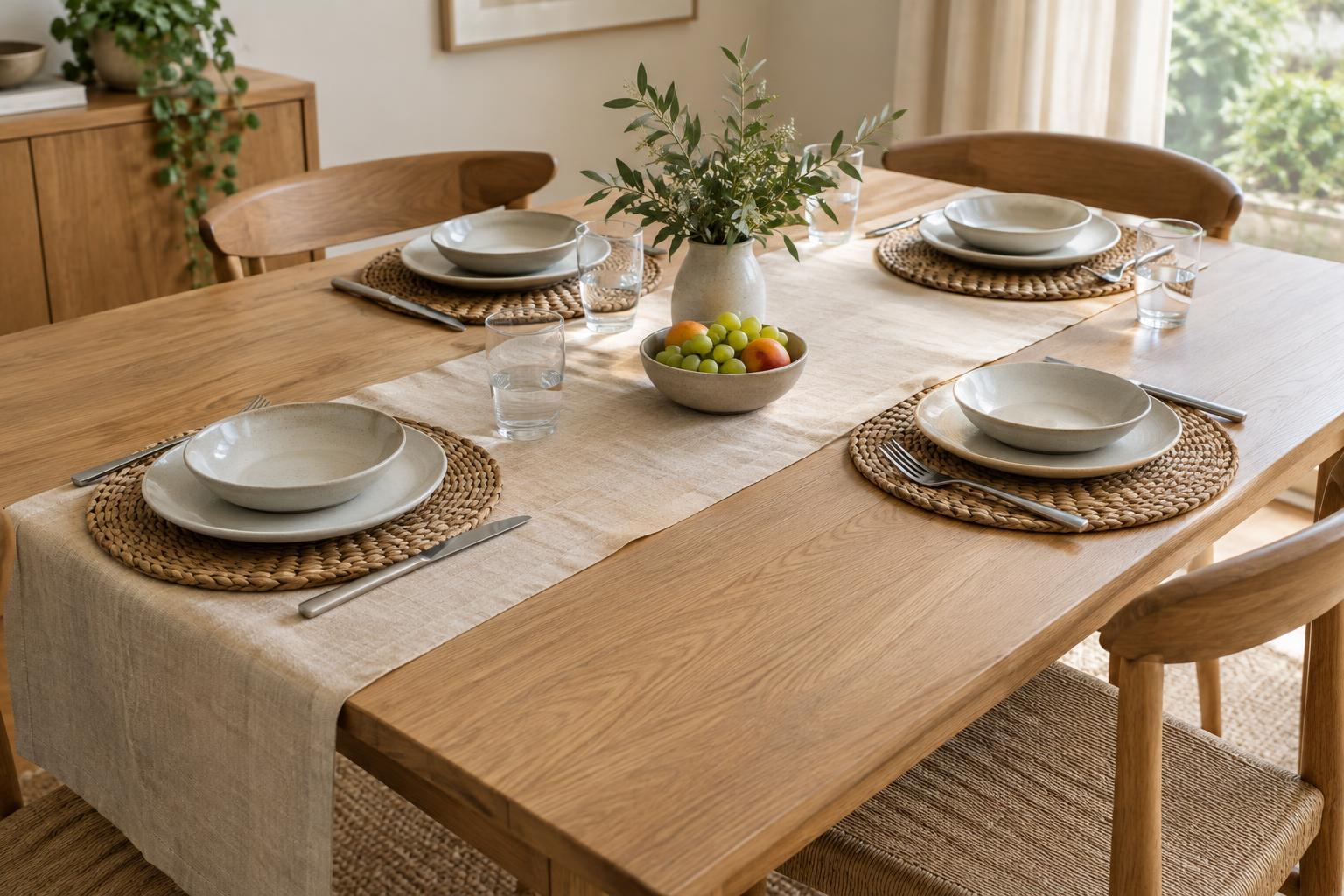
For most everyday meals, the simplest decision is to choose the piece that solves your main problem. Pick placemats if you want defined settings and easy, individual cleanup. Pick a runner if you want a decorative centre line and do not need coverage beneath each plate. Use both when the table is roomy enough and each piece has a purpose: placemats for diners, with a relatively slim runner between them for shared items.
You do not need textiles at every meal. On a small table, bare space can make dining more comfortable, especially if the tabletop is suitable for everyday use and easy to clean. Try setting the table with your usual plates, glasses and serving dishes before deciding. The arrangement that leaves room to eat, reach and wipe up comfortably is likely to be the one you enjoy using.