What a rug pad can do
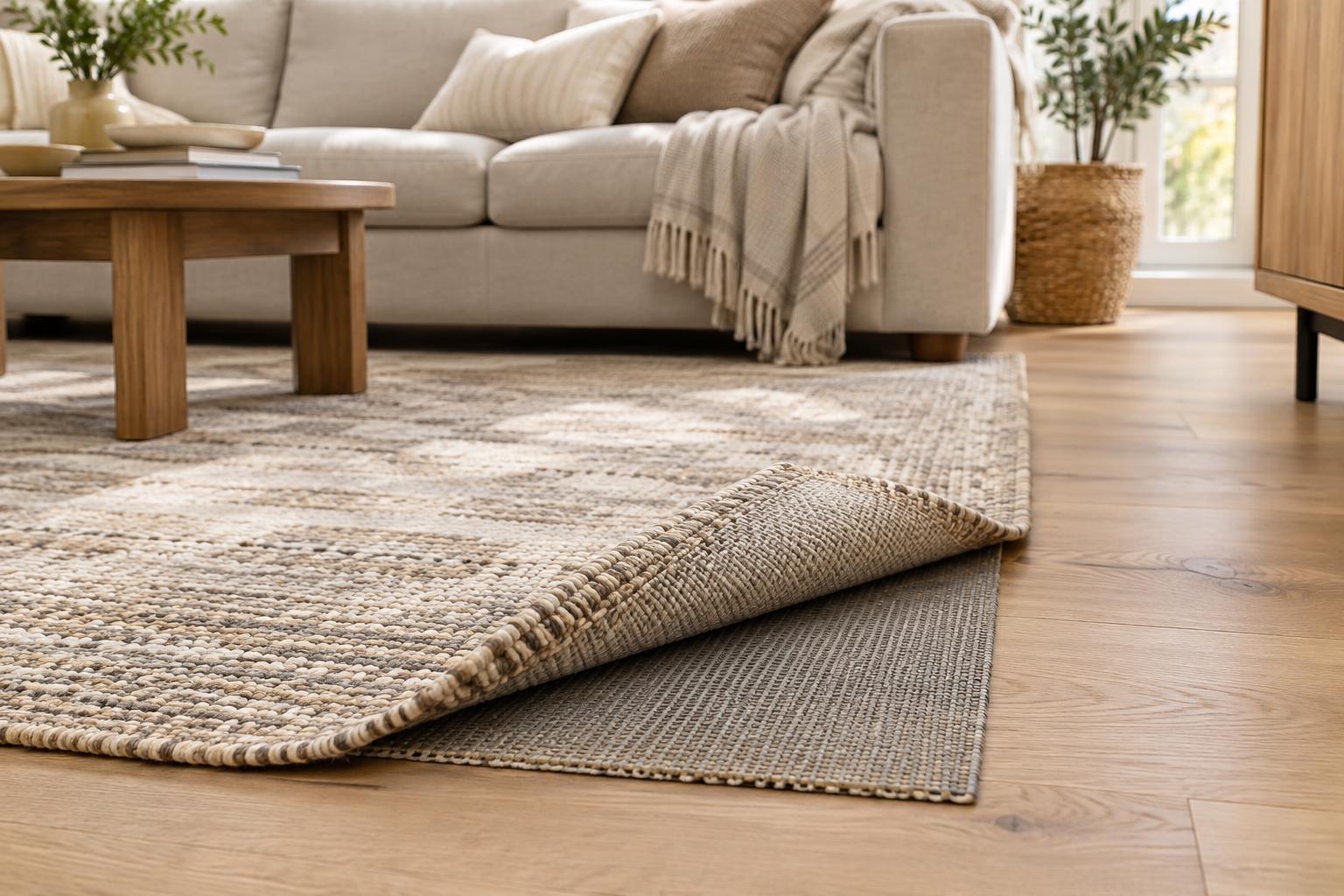
A rug pad is a separate layer placed between a rug and the floor. Its most useful job depends on the rug: it may reduce sliding, add cushioning, help a thin rug lie flatter or provide a little separation from the floor beneath it. The right pad should support the rug without changing how it looks or creating a raised edge that is easy to catch with a foot.
A pad is especially worth considering beneath a small rug that shifts when walked on, a runner in a busy passage, or a larger rug whose edges tend to move as furniture is used. Even a heavy rug can creep across a smooth floor over time. A pad may be less important if a rug already has an effective backing and stays firmly in place, but check how that backing interacts with your flooring before relying on it.
Start with the rug and the room
For a lightweight flatweave or runner, grip is usually the priority. A low-profile, non-slip pad can help keep the rug in position without making it look bulky. For a thick or heavy rug, a denser cushioned pad may add comfort and help the rug sit evenly. Choose a pad that can support the rug’s weight rather than one that compresses easily and leaves it feeling uneven underfoot.
Consider what happens around the rug, too. In a doorway, allow for the door’s swing before adding thickness. Beneath a dining table, a firm, relatively thin pad can make it easier to move chairs than a very soft one. If part of the rug sits beneath furniture, check that the pad will lie flat across the whole area rather than bunching where furniture legs meet it.
Rug construction matters. An open-weave or delicate rug may benefit from a pad that supports it across its surface, while a rug with a textured or rubbery backing may need a different option—or no additional pad. If the rug maker gives guidance about pads, follow it before making a choice based on thickness alone.
Match the pad to the floor
Floor compatibility is as important as grip. Some pad materials or coatings may react with certain floor finishes, leave residue or discolour a surface, particularly when heat and pressure are involved. Check the pad maker’s flooring guidance and any care instructions from your floor manufacturer. A label that says “non-slip” does not, by itself, tell you whether a pad suits your floor.
Felt-and-rubber pads combine cushioning with a gripping surface and can be a useful option when both qualities are wanted, provided their materials are approved for your flooring. Thin open-grid pads are often chosen primarily for grip, but their composition and floor compatibility still need checking. On carpet, look for a pad intended for rug-over-carpet use; a design made to grip a hard floor may not hold well on soft pile.
Take extra care with heated floors. Confirm that both the rug and pad are suitable for the floor’s heating system and that their combined layers meet its guidance. If the information is unclear, ask the relevant manufacturer before placing them over the heated area.
Get the size and thickness right
The pad should be slightly smaller than the rug so it remains hidden and the rug edges can rest on the floor. Measure the rug itself rather than relying only on its labelled size, then use the pad maker’s trimming instructions to leave an even border. Avoid cutting a pad so small that it supports only the centre: unsupported edges may curl or shift.
More thickness is not always better. A plush pad may feel pleasant beside a bed, but it can make a low rug sit awkwardly near a door or create an uneven transition on a busy route. Aim for enough cushioning to suit the space while keeping the rug stable and its edges low. If you are choosing between two pads, think about how the rug will be walked on and whether furniture needs to move across it.
Check it after installation
Before laying the pad, clean and fully dry the floor according to its care instructions. Lay the pad flat, position the rug over it and walk around the rug to check for ripples, movement or raised corners. Reposition or trim the pad if it shows at the edges or prevents the rug from lying smoothly.
Lift the rug occasionally when cleaning so you can remove trapped dust and check the floor and pad for residue or changes in colour. If anything looks or feels wrong, remove the pad and consult the relevant care guidance. A rug pad is not a permanent fix for a rug that curls badly or a floor it cannot grip; it is most effective when its material, size and thickness suit the specific rug and room.