Start with the effect you want
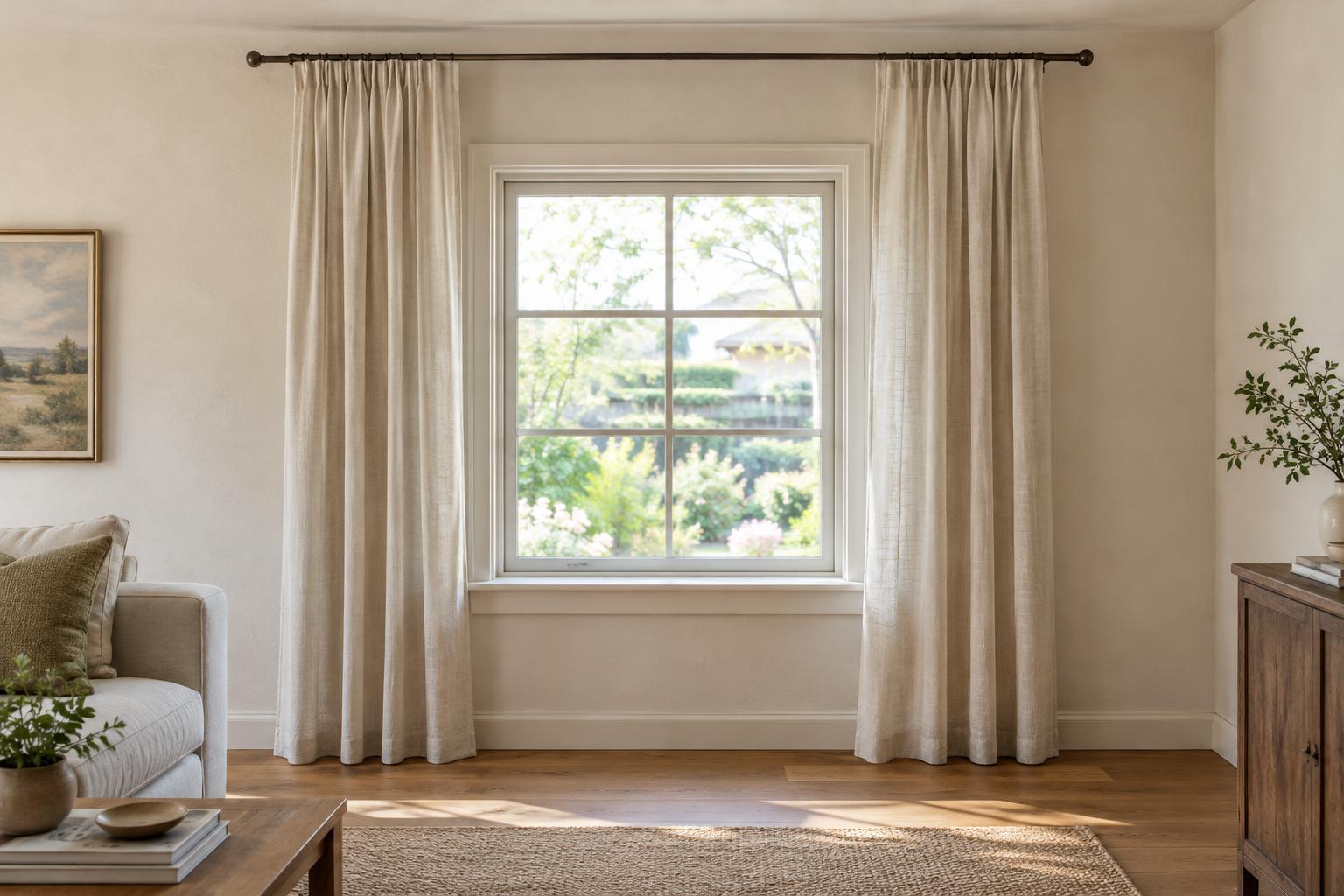
Curtains frame more than the glass: they draw the eye to a larger shape made up of the rod, fabric, and floor. A rod placed close to the top of the window frame emphasizes the window’s existing size. Raising it can make the wall and window feel taller, while extending it beyond the sides can make a narrow window look more generous.
Before choosing a position, stand back and look at the entire wall. Note the ceiling height, the distance from the frame to nearby corners, and whether other windows share the same wall. The most flattering position is not necessarily the highest or widest possible one; it is the one that gives the fabric enough space without making the rod look disconnected from the window.
Choose a height that connects the window and ceiling
As a starting point, try holding the rod roughly 10–20 cm above the window frame, if the wall allows. This creates visible space above the frame while keeping the curtains connected to it. In a room with a modest gap between the window and ceiling, a position closer to the ceiling can create a taller-looking line. Leave enough breathing room below any cornice or ceiling trim so the rod does not look squeezed in.
Height also depends on the curtain heading. Rings suspend fabric below the rod, while some pocket and tab styles place fabric above or around it. Hold up the actual curtain, or check its hanging dimensions, before marking holes. If you want the panels to skim the floor, measure from the point where the fabric will hang—not simply from the rod—to the floor at several spots. Floors and ceilings are not always perfectly level.
Extend the rod to give open curtains somewhere to go
A rod that ends at the window frame leaves little space for gathered fabric. When the curtains are open, the panels may cover part of the glass and make the opening feel narrower. Extending the rod beyond each side lets more fabric rest against the wall, revealing more of the window. Around 15–25 cm per side is a useful starting range, but full panels or thick fabric may need more room.
Check what the extra width will meet. A close corner, wardrobe, wall light, or neighboring window may limit the extension. If one side has less wall space than the other, you can still aim for a balanced overall arrangement rather than forcing identical measurements. On a wall with multiple windows, consistent rod height often creates a calmer line, even when the spaces beside each window differ.
Match the position to the curtains and the room
The planned drop affects where the rod belongs. Floor-length curtains usually create a continuous vertical line that can make a window feel taller. A small gap above the floor keeps the hem clear and makes opening and closing easier; a slight break at the floor gives a softer look but needs more precise measuring. Shorter curtains can be practical where a radiator, worktop, or furniture sits below the window, though they will create a different visual effect.
Consider how the curtains will function, too. Panels intended mainly to soften a wall can sit wider than panels that must close tightly for privacy. Check that the chosen position allows closing panels to overlap adequately at the center and cover the edges of the window. Allow clearance for handles, deep window sills, and anything that could catch the fabric.
Test the layout before drilling
Use painter’s tape to mark the proposed rod line and its ends, then step back and look from the doorway and the places where you normally sit. If possible, hold one panel in position to see how much space it occupies when gathered. This quick test reveals whether the rod needs to move up, widen, or shift slightly to relate better to the whole wall.
Finally, check the mounting surface and the weight of the curtains. Suitable fixings depend on the wall and rod, and a long or heavy arrangement may need a center support. Measure and mark bracket positions carefully so the rod hangs level. The goal is a placement that flatters the window but also lets the curtains move freely, close properly, and hang at the length you intended.